In Praise of Doing Nothing: The Quiet Resistance of an Unscheduled Mind
Somewhere between the third podcast episode of a morning commute and the ambient hum of a productivity app nudging a person toward their daily goals, something has been lost. Not time — Americans are, by most measures, extraordinarily efficient with time. What has been lost is the willingness to waste it.
Boredom, in its truest form, has become almost structurally impossible to sustain. The phone is always within reach. The queue of content is effectively infinite. The social expectation to be engaged, responsive, and visibly productive extends now into spaces that once belonged to idleness — the waiting room, the lunch break, the quiet Sunday afternoon. To sit without purpose, to stare at nothing in particular, to let the mind wander without directing it toward anything useful: these have become, in the contemporary American context, faintly embarrassing acts.
This is not an accident. It is the logical outcome of a culture that has spent decades treating attention as a resource to be optimized and time as a currency to be spent wisely. And it raises a question that is more unsettling than it first appears: What are we afraid we might find, if we ever truly stopped?
How Productivity Colonized Stillness
The American relationship with busyness has always had a moral undertone. Industriousness was, for much of the nation's cultural history, a marker of character — the person who worked hard was, by extension, a person of worth. What has shifted in recent decades is not the value placed on productivity, but the territory it now claims.
It was once sufficient to be productive during working hours. Leisure time was understood as genuinely separate — a space governed by different rules, where the absence of output was not a deficit but a feature. That boundary has eroded considerably. The rise of the gig economy, the normalization of remote work, the gamification of personal wellness, and the relentless optimization of hobbies (the amateur runner tracking splits, the home cook building a following, the reader logging titles toward a yearly goal) have collectively dissolved the distinction between living and performing.
Boredom, in this context, is not merely uncomfortable. It is transgressive. To be bored is to be, however briefly, outside the system of continuous improvement — and the system has made certain that this feels like failure.
What Boredom Actually Does
The case for idleness is not simply a case for rest, though rest matters. It is a case for the particular quality of thinking that only becomes available when the mind is not being directed toward anything.
Researchers have observed for some time that the brain's so-called default mode network — the neural activity associated with mind-wandering, daydreaming, and undirected thought — is not dormant during boredom but unusually active. This is the cognitive territory where certain kinds of self-reflection become possible: the integration of experience, the processing of emotion, the slow emergence of questions that do not have obvious or immediate answers.
These are not trivial functions. They are, in many respects, the functions most central to understanding oneself — to knowing, with some clarity, what one values, what one fears, what one actually thinks about the life one is living. And they are precisely the functions that continuous stimulation forecloses.
There is something worth naming here about the relationship between boredom and genuine connection — not just with others, but with oneself. The version of a person that exists beneath the productivity narrative, beneath the curated self-presentation, beneath the constant orientation toward goals and outputs: that person requires stillness to surface. Without it, what remains is a performance of selfhood rather than the thing itself.
The Social Dimension of Never Stopping
The consequences of this arrangement extend beyond the individual. When no one is ever truly idle, when every gathering is documented and every free hour is accounted for, the texture of human relationship changes in ways that are difficult to articulate but easy to feel.
Consider what is lost when two people can no longer simply sit together without filling the silence. Or when a family dinner becomes a series of parallel screen engagements rather than an occasion for unstructured conversation. Or when a person, alone for the first time in weeks, reaches immediately for their phone rather than tolerating even a few minutes of their own company.
Boredom, paradoxically, may be one of the conditions under which genuine intimacy becomes possible. Not the manufactured intimacy of a scheduled vulnerability exercise or a curated deep-conversation prompt, but the kind that emerges when two people have nothing in particular to do and nowhere in particular to be — and simply exist together in that openness.
This is a form of presence that cannot be optimized into a calendar. It requires, by definition, the willingness to be unproductive together.
Reclaiming the Unscheduled Hour
None of this is to suggest that ambition is without value, or that the impulse to improve and achieve is inherently misguided. The question is not whether to engage with life purposefully, but whether purposefulness has been allowed to colonize every available moment — and what that colonization costs.
Reclaiming boredom is not a passive act. In the current cultural environment, it requires something close to deliberate resistance. It means putting the phone in another room and allowing the discomfort that follows to simply exist, without immediately seeking relief. It means sitting with an afternoon that has no agenda and tolerating the initial anxiety of that vacancy. It means, on occasion, choosing to be genuinely, unproductively bored — not as a wellness strategy, not as a productivity hack dressed in the language of mindfulness, but as an honest acknowledgment that the self requires space it is not being given.
What tends to emerge from that space is not always comfortable. The thoughts that surface in genuine idleness are not always pleasant. But they are, more often than not, true. They are the thoughts that belong to the person rather than to the performance of the person.
Will We Remember What Silence Was For
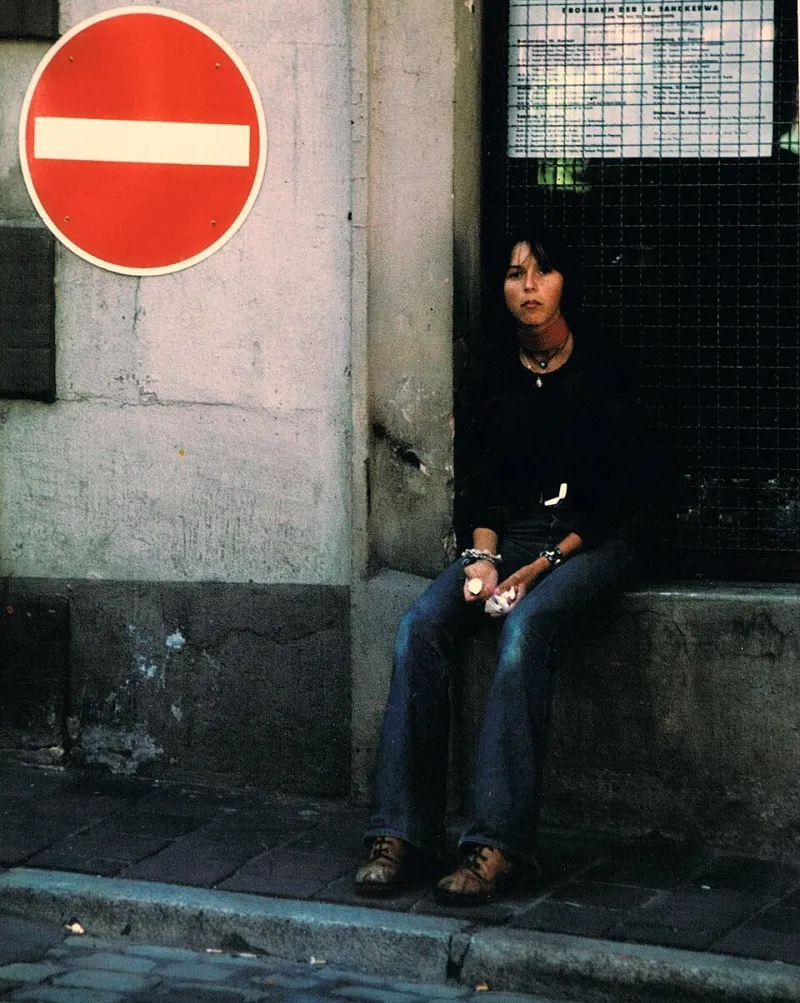
There is a version of American life in which the unscheduled hour is not a problem to be solved but a gift to be inhabited. In which the person sitting quietly on a porch, not listening to anything, not working toward anything, not documenting anything, is not falling behind but arriving somewhere.
The willingness to be bored — truly, wastefully, unproductively bored — may be one of the quieter forms of self-respect available to us. It is the insistence that the self has value outside of its outputs, that the mind deserves to wander without being immediately put to use, that some of the most important things a person can know about themselves will only be discovered in the absence of noise.
That absence is harder to find than it has ever been. Which may be precisely why it matters more than ever to seek it.