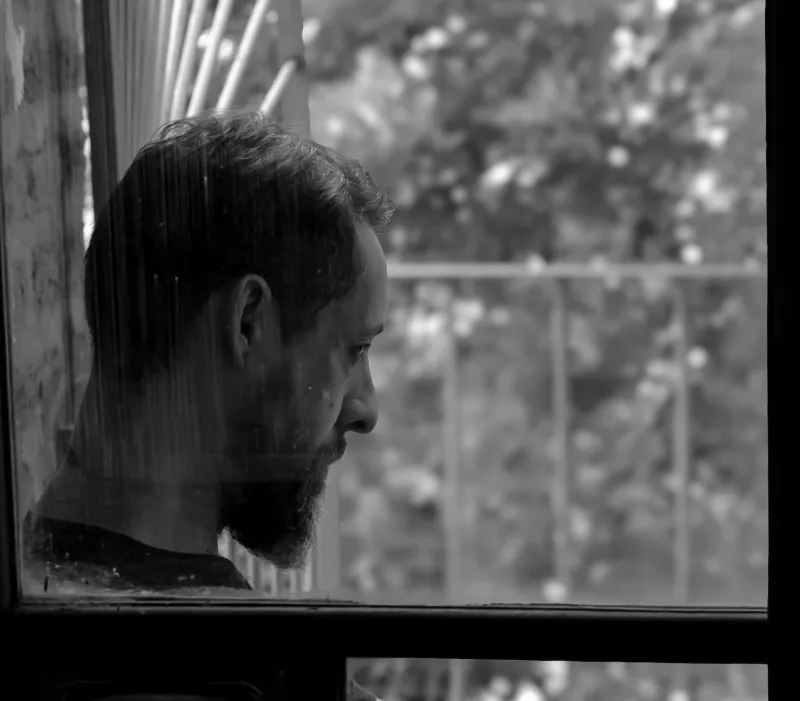
The Art of Making Yourself Smaller: When Generosity Becomes Self-Erasure
Photo: jhoc, CC BY 2.0, via Wikimedia Commons
There is a particular kind of shrinking that feels, from the inside, almost like virtue. We soften our opinions, quiet our ambitions, and dim the parts of ourselves that might overwhelm the people we love—not because anyone asked us to, but because we decided, quietly and alone, that their comfort was worth more than our fullness. The question worth sitting with is whether that decision is an act of love or a slow surrender of the self.
Most of us have done this. We have sat at a dinner table and swallowed an opinion we knew would provoke. We have downplayed a promotion at work because the person across from us is still searching for theirs. We have made ourselves easier to be around by becoming less of who we actually are. And we have done all of this without being asked—sometimes without even being aware that we were doing it at all.
The Unspoken Calculation
Self-diminishment of this kind rarely announces itself as a choice. It arrives as instinct, dressed in the language of consideration. I don't want to make this about me. I don't want to seem like I'm bragging. I don't want to rock the boat. These are the sentences we rehearse so fluently that they begin to feel like moral positions rather than accommodations.
And yet, underneath each of them is a calculation—one we perform so quickly it barely registers as thought. We assess the emotional landscape of a room or a relationship, we identify where our authentic self might cause friction, and we preemptively sand down the edges. The result is a version of us that is smoother, quieter, and considerably less present.
What makes this worth examining is the word preemptively. We are not responding to a request. We are anticipating one that was never made. The people around us have not, in most cases, asked us to be smaller. We have simply decided, on their behalf, that they would prefer it.
Whose Comfort Are We Actually Protecting?
It is tempting to frame this habit as selflessness—as a kind of relational attentiveness that places others' emotional needs above our own. And there is something genuinely caring in the impulse. The desire not to overwhelm, not to dominate, not to make someone feel diminished by comparison is rooted in empathy.
But empathy, when it consistently flows in only one direction, begins to look less like generosity and more like avoidance. When we shrink ourselves to protect others from discomfort, we are also, quietly, protecting ourselves—from the vulnerability of being fully seen, from the risk of envy or resentment, from the discomfort of taking up space we are not entirely sure we deserve.
This is the part that is harder to admit: that making ourselves smaller is sometimes less about the other person's comfort and more about our own. It resolves something for us. It removes the uncertainty of being witnessed at full size. It allows us to remain in a relationship without testing whether that relationship can hold the weight of who we actually are.
The People We Shrink For
Not everyone provokes this response in us equally. Most people find that self-diminishment is not a generalized habit but a targeted one—activated by specific relationships, specific histories, specific wounds.
We shrink for the parent who always seemed faintly threatened by our ambitions. We shrink for the friend whose life has not unfolded the way they hoped, and whose disappointment we absorb as a kind of guilt. We shrink for the partner who has never explicitly asked us to be less, but around whom we have learned, slowly and without ceremony, to edit ourselves into something more manageable.
These relationships are often the ones we love most fiercely. And that is precisely what makes the pattern so difficult to untangle. The shrinking feels like loyalty. It feels like the considerate thing to do. It feels, in its own complicated way, like proof of how much we care.
What it does not feel like—not immediately, anyway—is loss.
What It Costs Over Time
The cost of chronic self-diminishment is not dramatic. It does not arrive as a single rupture. It accumulates, the way a slow leak does—quietly, incrementally, and often unnoticed until something has already been irreparably depleted.
Over time, the version of ourselves we have been suppressing does not simply wait patiently for permission to emerge. It begins to feel unfamiliar. We lose fluency in our own opinions. We become uncertain of our own preferences. We find, in moments of genuine solitude, that we are not entirely sure what we would say if we were allowed to say everything.
There is also the matter of resentment—that unsettling emotion that tends to accumulate in the space between what we give and what we withhold from ourselves. We rarely resent the people we shrink for directly. Instead, we resent the relationship itself, or the version of ourselves we become inside it. We begin to feel, faintly but persistently, that something is being taken from us—even though no one is taking it. We are giving it away, freely and repeatedly, under the quiet assumption that this is what love requires.
The Question Beneath the Question
If we sit long enough with this habit, we arrive at something worth examining with considerable honesty: we do not only shrink because we want others to be comfortable. We shrink because some part of us is not entirely convinced that our full self is welcome.
This is the deeper wound—not the relationships that seem to require our smallness, but the internal verdict that preceded them. The belief, absorbed somewhere along the way and rarely interrogated since, that our authentic presence is too much, too complicated, too likely to disturb the equilibrium of the people we need.
And so the question is not simply whether we should stop making ourselves smaller. The question is what we believe about the self we have been miniaturizing. Whether we trust it. Whether we think the people we love could bear the weight of it. Whether we are willing to find out.
Returning to Full Size
Returning to fullness is not a dramatic act. It does not require confrontation or declaration. It begins, usually, with the small decision to say the true thing instead of the careful thing—once, in a low-stakes moment, with someone who has given us no particular reason to be afraid.
It continues with the equally small decision to notice when the familiar impulse to shrink arises, and to ask, genuinely and without judgment, whose comfort we are actually serving.
Because here is what tends to surprise people who have spent years making themselves smaller: the relationships that matter rarely require it. The people worth staying close to are not, as it turns out, as fragile as we decided they were. And the self we have been protecting them from is, more often than not, the very thing they were hoping to know.
We will not always know, in advance, which relationships can hold us. But we owe it to ourselves—and perhaps to the people we love—to stop assuming they cannot.