The Safety of Maybe: How We Use Indecision to Avoid Becoming Someone
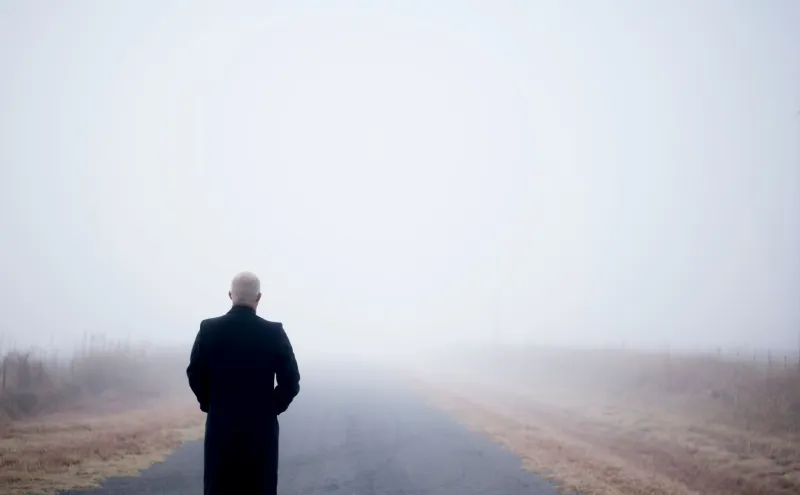
There is a particular kind of limbo that many of us have grown fluent in inhabiting. It is not the limbo of tragedy or crisis — it asks nothing so dramatic of us. It is quieter than that. It lives in the unanswered email sitting in your drafts folder, in the career pivot you have researched for three years without executing, in the relationship you have neither deepened nor ended. It is the limbo of the unmade decision, and for a great many people in this country, it has become something closer to a permanent address than a temporary stop.
We tend to speak of indecision as a cognitive problem — a failure of information, clarity, or nerve. If only we knew more, thought harder, waited a little longer, the right answer would reveal itself. But this framing, however comforting, may be obscuring something more revealing. What if indecision is not a gap in our thinking at all? What if it is, in fact, a conclusion we have already reached — one that simply goes unacknowledged?
The Illusion of the Open Door
To remain undecided is to remain, in some meaningful sense, unlimited. So long as you have not chosen the graduate program, you are still potentially the person who might choose it. So long as you have not ended the relationship, you are still potentially the person who might stay and transform it. The unchosen path retains a kind of luminous possibility that the chosen path, by definition, forfeits the moment you step onto it.
This is not a small thing. There is genuine psychological comfort in maintaining what researchers sometimes call the illusion of optionality — the sense that multiple futures remain available to you simultaneously. American culture, in particular, has long worshipped at the altar of open possibility. We are a nation that celebrates the pivot, the reinvention, the late bloomer. The mythology of the fresh start runs deep here. And so the person who has not yet committed to anything can tell themselves, with some cultural backing, that they are simply keeping their options open. That they are being strategic. Measured. Wise.
But there is a point at which keeping options open becomes its own kind of closing. Every year spent in deliberate suspension is a year not spent building fluency in any particular direction. And perhaps more importantly, it is a year spent avoiding the one thing that commitment unavoidably requires: the public declaration of desire.
The Vulnerability of Wanting Openly
To choose something — truly choose it, not just drift toward it — is to announce what you value. It is to say, in effect: this matters to me enough that I am willing to be held accountable to it. And accountability, it turns out, is an extraordinarily frightening proposition for a great many of us.
When you choose a path and it disappoints you, the disappointment belongs to you entirely. There is no comfort available in the thought that perhaps the other option would have been better, because you have foreclosed that comfort by choosing. When you choose a person and the relationship becomes difficult, you cannot reassure yourself that you simply haven't met the right one yet. You have named someone as the right one, and now you must reckon with all the complexity that naming entails.
Indecision, by contrast, distributes the emotional risk across an indefinite horizon. Nothing can fully fail because nothing has fully begun. You cannot be said to have made a mistake if you have not yet, technically, made a move. The person who is perpetually considering leaving their job is insulated, in some psychological sense, from the person who leaves and finds that the next job is no better. The considering costs nothing — or so it appears.
What it actually costs, of course, is the life that might have been built in the meantime. But that cost arrives slowly, in installments, and is therefore much easier to ignore than the sharp, immediate exposure of an open want.
Indecision as Identity
Perhaps the most underexamined dimension of chronic indecision is the way it can quietly become a personality — a defining characteristic that a person begins to organize their self-concept around. The person who is still figuring things out occupies a particular social role in American life. They are granted a kind of extended adolescence, a pass on the questions that others their age are expected to have already answered. And while this grace period can be genuinely useful in early adulthood, it tends to curdle into something more troubling when it extends indefinitely.
At some point, the person who is always between things is not between things at all. They have simply chosen betweenness as their permanent condition. The indecision has become the decision.
This is worth sitting with, because it reframes the question entirely. The task is no longer to find the courage to choose. It is to recognize that a choice is already being made — continuously, quietly, and with compounding consequence. To remain suspended between two lives is to live neither of them fully. To endlessly defer the question of what you want is to answer it in the negative: I will not allow myself to want anything that might be taken from me.
What Commitment Actually Requires
Commitment does not require certainty. This is perhaps the most important distinction to make, and the one that chronic indecision most reliably obscures. We tell ourselves we will decide once we are sure, and in doing so, we set a condition that reality is structurally incapable of meeting. Certainty about the future is not available to human beings. It has never been available. Waiting for it is not patience — it is a very sophisticated form of avoidance.
What commitment actually requires is something more modest and more frightening than certainty: the willingness to be wrong. To choose, knowing you might regret it. To want something openly, knowing it might be refused or lost. To become, definitively, the kind of person who chose this particular thing — and to accept that this definition, however partial, is now part of your record.
There is grief in that. Genuine grief. Every real decision is a small death of the self that did not make it. And it would be dishonest to suggest otherwise.
But there is also something on the other side of that grief that the perpetually undecided rarely get to encounter: the particular solidity that comes from having stood somewhere. From having said, without equivocation, this is what I wanted, and I reached for it. Whether the reach succeeded or not, it happened. It was real. It belonged to you in a way that the careful, protected, endlessly deferred almost-decision never quite can.
Will We Ever Choose?
The question this site has always been interested in is not whether we can — we are capable of far more than we typically allow ourselves. The more honest question is whether we will. Whether we will accept the exposure that desire requires. Whether we will grieve the unlived alternatives with enough intention to actually release them.
The unmade decision is not waiting for more information. It is waiting for permission — permission to be someone specific, someone accountable, someone who wanted a particular thing and said so out loud. That permission, it turns out, is not granted by circumstance or clarity or time. It is granted only by the person who needs it most.