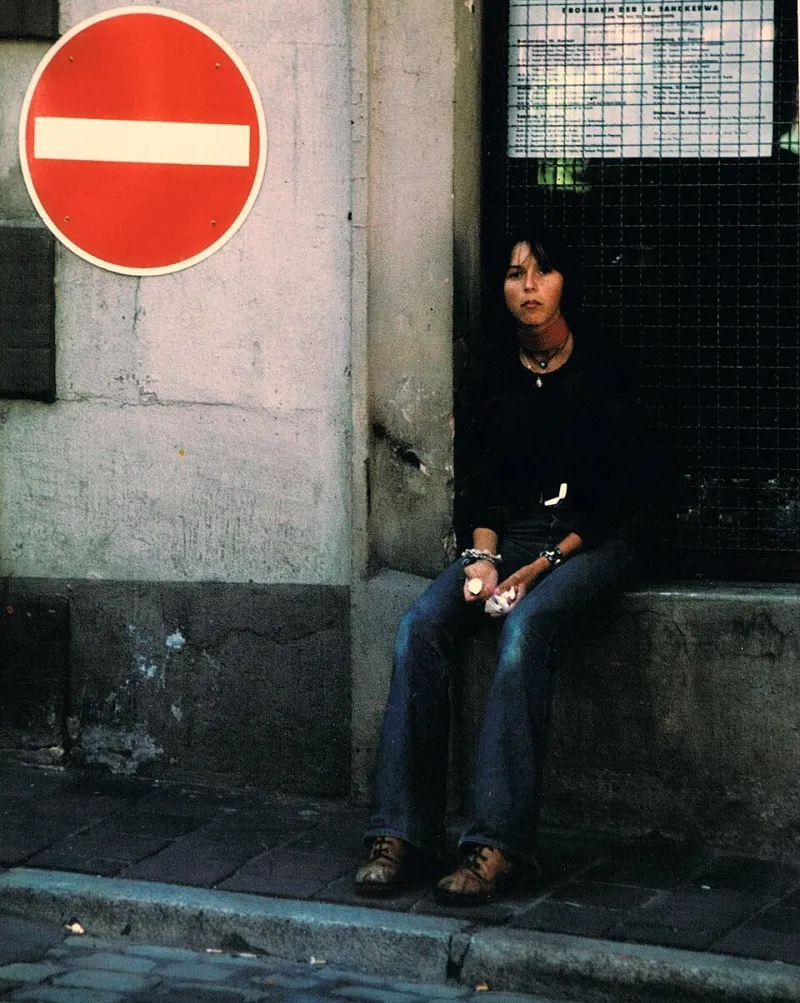
Staying as a Statement: The Quiet Rebellion of Choosing to Remain

Photo by Photo by Efe Kekikciler on Unsplash on Unsplash
There is a particular kind of restlessness that has come to define contemporary American life. It does not announce itself loudly. It lives instead in the background hum of open browser tabs, in the casual scroll through job listings even when you are not unhappy, in the way a long relationship can begin to feel, without any single precipitating event, like a door you forgot to check for other rooms behind it. We have built a culture of optionality—and somewhere along the way, the act of staying put began to feel less like a choice and more like a concession.
This is worth sitting with.
The Architecture of Endless Choice
The philosopher Barry Schwartz wrote, over two decades ago, about the paradox of choice—the counterintuitive finding that more options frequently produce less satisfaction, not more. His argument was largely economic and psychological, but its implications run deeper than consumer behavior. When every dimension of life becomes optimizable, when every commitment can be revisited and every identity can be updated like software, the self begins to lose its moorings. We become, in the language of the market, perpetually liquid assets—always available for reallocation to something better.
The culture reinforces this at every turn. Career coaches counsel pivoting. Relationship therapists speak of outgrowing partners. Personal development culture, in its well-meaning way, treats the present self as a draft and the future self as the real thing. Even geography has become provisional: the rise of remote work has untethered millions of Americans from the places they once called home, and the ability to live anywhere has quietly made it harder to feel entirely at home anywhere.
None of this is entirely wrong. Flexibility has genuine value. Some commitments deserve to be broken. Not every staying is noble—sometimes it is merely inertia dressed up in the language of loyalty.
But something has been lost in the wholesale embrace of impermanence, and it is worth naming carefully.
What Commitment Actually Costs
To commit deeply—to a person, a community, a vocation, a set of beliefs—is to accept a form of voluntary limitation. It is to say: I will not treat this as provisional. I will not hold it at arm's length while I wait for something better to materialize. I will bring the full weight of my attention and my loyalty to this particular thing, in this particular place, with this particular person.
This is not a small thing. It requires a tolerance for irreversibility that our culture has spent considerable energy eroding. When you stay in a city for twenty years, you are not just staying—you are becoming legible. Neighbors know your name. You develop opinions about the local zoning board. You have a dentist you actually trust. You accumulate, slowly and without drama, a life that bears the specific shape of your presence in it. That kind of rootedness is not glamorous. It does not translate well to a personal brand. But it produces something that perpetual motion cannot: depth.
The same is true in relationships. There is a version of intimacy that is only available to people who have chosen, repeatedly and under difficult circumstances, to remain. The therapist Esther Perel has written about the tension between security and desire in long partnerships, but beneath that tension lies something more fundamental: the question of whether you are willing to be truly known. To be truly known requires time, consistency, and the willingness to be seen not only at your most becoming. Commitment, in this sense, is not the enemy of growth. It is the condition under which certain kinds of growth become possible.
The Radical Grammar of Remaining
Consider what it means, in the current American context, to tell someone you have lived in the same town for thirty years, that you have been with the same partner for two decades, that you have held the same set of core beliefs since your late twenties and see no particular reason to abandon them. There is a good chance the response will carry, however gently, a note of concern. Have you not been curious enough? Have you not pushed yourself? The subtext is clear: staying is what people do when they run out of better options, or when they lack the imagination to seek them.
This is a cultural story, not a universal truth. And it deserves scrutiny.
In many traditions—philosophical, religious, and literary—the capacity to remain is treated not as a failure of ambition but as a form of discipline. The Benedictine vow of stability, for instance, binds monks to a single community for life, on the premise that genuine transformation requires a fixed point. The novelist Marilynne Robinson has written about the American Midwest with a reverence for exactly this kind of rootedness—the quiet dignity of people who have chosen a place and allowed it to choose them back. What these traditions share is a conviction that depth is not achieved by moving through many surfaces, but by pressing into one.
This does not mean that leaving is always wrong, or that commitment is always wise. It means that staying deserves to be recognized as a genuine act of will—one that requires as much courage as departure, and perhaps more.
Will We Stay Long Enough to Find Out?
There is a question embedded in the logic of optionality that rarely gets asked aloud: what are we actually optimizing for? If the answer is maximum flexibility, we may be trading away the very things that make a life feel inhabited rather than managed. The capacity for deep commitment—to people, to places, to ideas—is not a limitation on freedom. It is, arguably, one of freedom's most meaningful expressions: the freedom to say, here, this, now, and mean it without an escape clause.
The next time you feel the familiar pull toward the exit—not because something is wrong, but simply because the culture has taught you to keep your options open—it may be worth pausing. Not to talk yourself out of leaving, but to ask honestly what staying might make possible that leaving never could.
Some things only reveal themselves to those who remain.