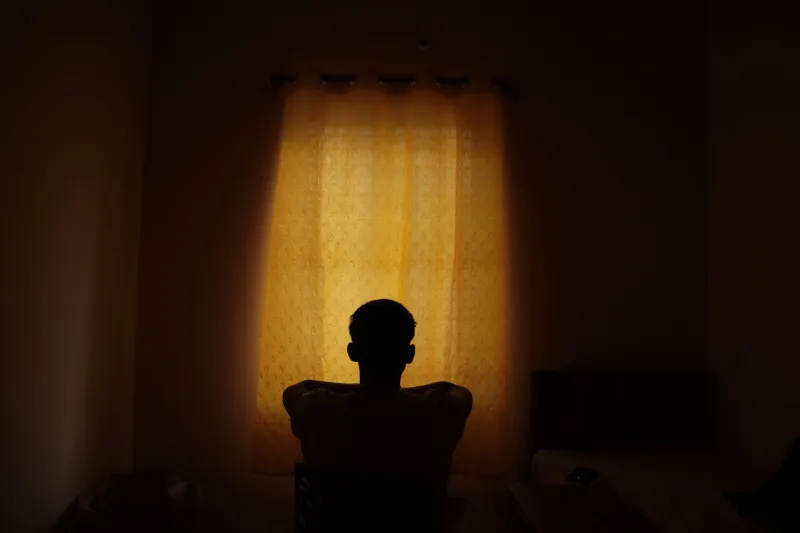
Ordinary and Alive: The Quiet Terror of a Life That Doesn't Ask to Be Remembered

Photo by Photo by Alexandra Fuller on Unsplash on Unsplash
There is a particular dread that settles in during unremarkable Tuesday afternoons — the kind where nothing is wrong, exactly, but nothing feels sufficient either. The dishes are clean. The inbox is manageable. The day has passed without incident or distinction. And yet, for many Americans, this is precisely the moment when anxiety arrives. Not because anything has gone wrong, but because nothing has gone memorably right.
We have become, quietly and collectively, a culture that experiences ordinariness as a form of loss.
The Mythology of Exceptional Lives
The American self-conception has always carried within it a particular strain of exceptionalism — the belief that each individual life, properly pursued, ought to amount to something visible. This is not entirely new. The Protestant ethic, the frontier mythology, the immigrant's bargain with upward mobility: all of these narratives promised that effort and virtue would be legible, that a life well-lived would leave a mark.
What has changed is the granularity of the performance required. Social media did not invent the anxiety of ordinariness, but it industrialized it. Platforms built on attention economics taught us to evaluate our lives the way an algorithm evaluates content: through engagement, reach, and resonance. A life that generates no response begins to feel, in a very literal sense, like a life that is not working.
The result is a peculiar form of self-surveillance. We have learned to look at our own experiences from the outside — to ask, before we have even finished living a moment, whether it is the kind of moment that translates. A meal, a view, a relationship milestone: these are now assessed not only for how they feel but for how they will appear. The interior life has developed a press secretary.
What We Fear When We Fear Ordinariness
It is worth asking what, precisely, we believe is at stake. When the thought of a quiet, unremarkable life produces genuine distress, what is the loss we are actually mourning?
For some, it is legacy — the fear that a life unwitnessed is a life that did not fully count. For others, it is more immediate: the suspicion that an ordinary life is evidence of ordinary effort, and that ordinary effort reflects something deficient in the self. Ordinariness, in this reading, is not neutral. It is diagnostic.
This conflation — between an unremarkable life and an insufficient one — is perhaps the most corrosive idea available to us. It transforms rest into laziness, contentment into complacency, and presence into passivity. It makes the person sitting quietly in their own life feel, without quite being able to articulate why, that they are falling behind.
Behind what, exactly, is never specified. But the feeling is real, and it is doing genuine damage.
The Dignity That Doesn't Broadcast
There is a counter-tradition, less visible precisely because it does not seek visibility. It exists in the lives of people who have made peace with smallness — not through resignation, but through a kind of philosophical renegotiation with what a life is for.
This is not the same as giving up. It is closer to what the philosopher Simone Weil called attention: the practice of being fully present to what is actually in front of you, without the distortion of an imagined audience. A person who tends their garden with genuine care, who shows up consistently for the people immediately around them, who builds something modest and durable over a long period of time — this person is living with a kind of integrity that the exceptionalism narrative cannot accommodate, because it cannot be easily shared.
The unremarkable life, lived with full attention, may be the most radical thing available to us right now. Not because it rejects ambition, but because it refuses to confuse ambition with worth.
The Question Beneath the Anxiety
If we sit with the discomfort of ordinariness long enough, we eventually arrive at the question it is actually asking: Is this enough? Not enough for an audience, not enough for a legacy, but enough for a life. Enough to justify the time spent. Enough to feel, at some honest reckoning, like it mattered.
That question deserves a serious answer, and the answer cannot come from outside. No amount of recognition will settle it permanently. People who have achieved genuine public distinction report the same hollow Tuesday afternoons. The algorithm is not the problem; the problem is the belief that the algorithm could ever answer a question this fundamental.
The freedom available in an ordinary life is not the freedom from ambition or from desire. It is the freedom from the exhausting project of making your existence legible to others before you have made it meaningful to yourself. It is the freedom to live in the interior of your own experience rather than perpetually at its surface.
Will we ever make peace with that? Will we allow ourselves the quiet dignity of a life that does not demand to be witnessed?
Those are not rhetorical questions. They are the ones worth carrying into the unremarkable Tuesday afternoon — and sitting with, without immediately reaching for a caption.