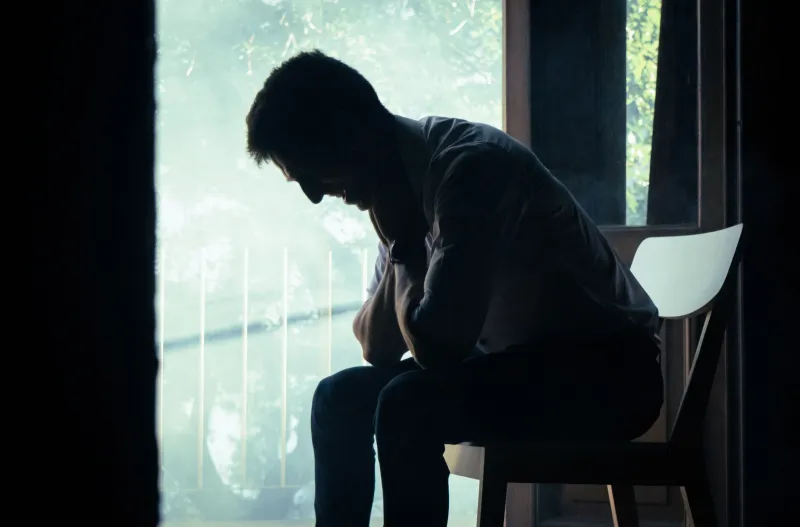
Every Door Left Open: The Hidden Cost of a Life Without Commitment

There is a peculiar anxiety that arrives not from having too few options, but from having too many. It is the paralysis of the person who has been careful—perhaps excessively careful—never to close a door that might someday prove useful. Who has kept relationships at a comfortable ambiguity, careers in a permanent state of transition, and cities treated as temporary arrangements that somehow persist for years.
This person is not without ambition or feeling. In fact, they often have an abundance of both. What they lack is the willingness to let either one land anywhere specific.
In contemporary American life, this posture has been rebranded as wisdom.
The Mythology of Optionality
Somewhere in the cultural shift of the last two decades, flexibility became a virtue in a way it had not quite been before. The gig economy sold it as freedom. Social media sold it as a curated identity that could be revised at will. Dating apps sold it as access to a market so vast that settling—for a neighborhood, a career, a partner—began to feel not like commitment but like failure of imagination.
The language shifted accordingly. People stopped saying they were undecided and started saying they were keeping their options open. The former implies a temporary state awaiting resolution. The latter implies a strategy—deliberate, even sophisticated.
And perhaps it is sophisticated, up to a point. There is genuine wisdom in not foreclosing possibilities prematurely, in remaining curious about what life might become. The problem is not the open door. The problem is when every door is open, always, as a permanent condition of existence.
When Flexibility Becomes Its Own Prison
Commitment has a bad reputation in certain quarters, and it is worth asking why. To commit to something—a city, a vocation, a person, a set of values—is to accept that you are also not committing to everything else. This is experienced, in a culture saturated with possibility, as a kind of loss. The economist would call it opportunity cost. The anxious modern person calls it settling.
But here is what the mythology of optionality tends to obscure: a life organized around the preservation of choice is still a life organized around something. It is organized around avoidance. And avoidance, however elegantly it is practiced, has consequences.
The person who will not commit to a city lives in a succession of temporary arrangements that never quite become home. The person who will not commit to a career accumulates credentials and pivots that signal capability without ever producing depth. The person who will not commit to a relationship remains perpetually available—which is to say, perpetually unattached—in a way that can masquerade as freedom for a surprisingly long time before it begins to feel like something else entirely.
The American Context
It would be unfair to discuss this phenomenon without acknowledging the structural conditions that produced it. American workers have watched institutional loyalty collapse over the past several decades. Companies that once offered careers now offer contracts. Pension plans gave way to 401(k)s, transferring risk from institutions to individuals and implicitly advising those individuals to remain portable. The housing market has made rootedness financially precarious in many of the cities where opportunity concentrates.
These are not imaginary pressures. They have genuinely reshaped what commitment is possible for many people, and it would be glib to ignore them.
And yet—the cultural response to structural precarity has been to internalize optionality as a value rather than to recognize it as an adaptation. We have not merely adjusted to a world that makes commitment harder; we have come to regard the adjustment itself as enlightenment. The person who refuses to be pinned down is celebrated. The person who chose one thing and stayed with it is quietly suspected of lacking imagination.
This is worth examining.
What Closing a Door Actually Does
There is something that happens when you commit—genuinely commit, not provisionally or strategically, but with the full acknowledgment that you are choosing this and therefore not choosing that. A kind of energy is released. Not the manic energy of someone who has been freed from constraint, but the quieter, more sustaining energy of someone who has arrived somewhere and can now begin the actual work of being there.
Depth, in almost any domain, is a function of sustained attention. The writer who commits to a project discovers things about the material that the writer who keeps their options open never encounters. The person who commits to a city learns its rhythms, its hidden resources, its particular quality of light in November, in a way that no amount of strategic flexibility permits. The person who commits to a relationship discovers that the other person is more interesting and more strange than the initial assessment suggested—but only because they stayed long enough to find out.
None of this is available to the person who is perpetually positioned to leave.
The Question Beneath the Question
When we ask why someone refuses to commit, we are often asking a simpler and more uncomfortable question: what are they afraid of? Because the preservation of optionality is, at its core, a risk-management strategy. It is a way of ensuring that no single choice can constitute a catastrophic error.
This is understandable. It is also, in the long run, its own kind of catastrophe—quieter, slower, and harder to attribute to any single decision because it is, precisely, the result of making none.
The open door is not inherently a problem. The question worth sitting with is whether you are keeping it open because you genuinely intend to walk through it someday, or because you have confused the option with the life itself.
At some point, standing in the doorway stops being a posture of possibility. It becomes a way of living in the threshold—present nowhere, committed to nothing, available to everything, and somehow, inexplicably, alone.