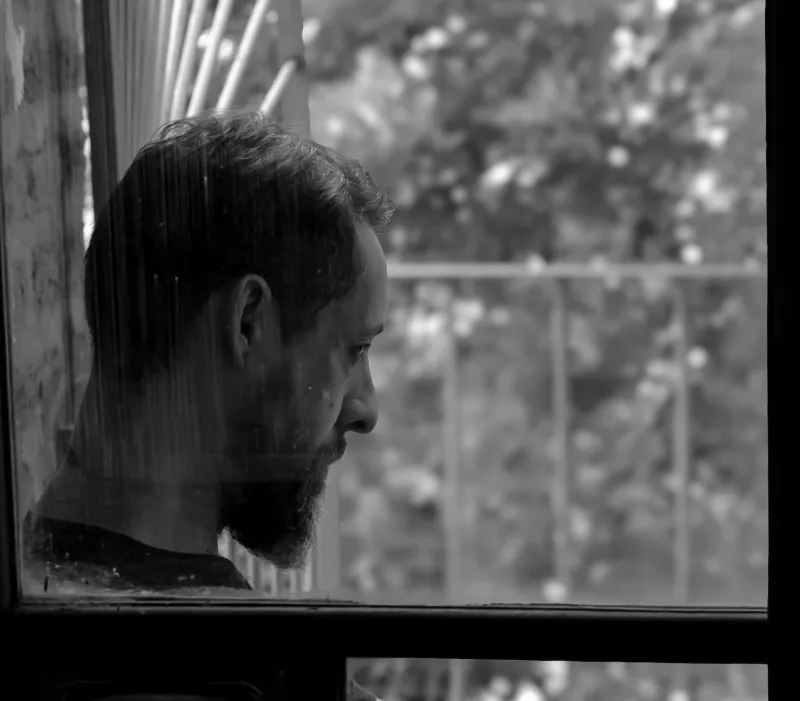
When No One Reaches Back: The Silent Weight of Being Easily Released
There is a grief that does not announce itself. It does not arrive with slammed doors or tearful confrontations. It comes, instead, in the absence of those things — in the stillness that follows when someone leaves and no one asks them to stay. Not a dramatic exit, but a quiet one. A departure so uncomplicated that it almost feels like agreement.
For some people, this is the defining texture of their relational life. They are not left cruelly or carelessly. They are simply... released. And the world moves on without so much as a pause.
The Difference Between Being Left and Being Let Go
Most conversations about loneliness focus on the act of leaving — who chose to go, and why. But there is an equally significant wound on the other side of that equation: the experience of not being pursued. Of watching someone walk toward the door and realizing, with a hollow clarity, that no part of you compelled them to turn around.
Psychologists have long noted that human beings derive a portion of their self-worth from what is sometimes called relational value — the sense that others regard us as important, worth investing in, worth preserving. When a relationship ends with a fight, with desperate phone calls, with someone showing up uninvited because they simply cannot accept the loss, there is pain in that, certainly. But embedded in that pain is also a kind of confirmation: you mattered enough to warrant the chaos.
When someone leaves cleanly, without resistance, without grief that spills outward — there is no such confirmation. There is only the question that fills the space where their anguish should have been: Was I ever difficult to lose?
The People Others Fight For
We have all witnessed it — the relationship that ends and then un-ends, repeatedly, because neither person can tolerate the finality. The friend group that fractures over someone's departure and spends months trying to broker a return. The colleague whose resignation prompts an emergency counteroffer. These are the people others fight for, and we tend to understand their appeal in vague, romantic terms: they are magnetic, irreplaceable, larger than life.
But the truth is more complicated. The relationships we fight to preserve are not always the healthiest ones, nor are the people we pursue the most virtuous. Sometimes we fight for relationships because they are familiar to the point of addiction. Sometimes we fight because our pride is entangled with the outcome. Sometimes the desperation to keep someone has more to do with our own fear of loss than with the genuine value of what we are losing.
This is worth sitting with, because it means that being easy to leave is not necessarily a verdict on your worth. It may, in fact, be a verdict on the emotional maturity of those who left.
What We Internalize Anyway
And yet — knowing this intellectually does not dissolve the ache. Because human beings are not primarily logical creatures. We are interpretive ones. We take the data of our lives and we build meaning from it, often in ways that disadvantage us.
If you have been let go without resistance more than once — by a partner who moved on with suspicious ease, by a friend group that reconstituted itself around your absence, by a family member who accepted your distance without a single attempt to close it — you begin to construct a narrative. The narrative is quiet but persistent. It says: Perhaps I am the kind of person people can afford to lose.
That narrative, once established, becomes architectural. It shapes how you enter new relationships — cautiously, with one foot already outside the door, pre-empting the ease of your own release by leaving first. It shapes how much you ask for, how loudly you assert your needs, how willing you are to believe that someone's presence is genuine rather than provisional. It makes you smaller, not because you are small, but because smallness begins to feel like the only honest appraisal of your place in others' lives.
The Question Beneath the Question
At the center of this particular loneliness is a question that is almost never asked directly: Do I inspire love that costs something?
Not love that is transactional or possessive. Not love that manifests as control or dependency. But love that has weight — love that, when faced with the prospect of ending, produces in the other person a genuine reckoning. A moment where they must decide, consciously and with full awareness of what they are giving up, whether to stay or go.
Many of us have never been certain we produce that kind of love in anyone. And the uncertainty itself becomes a companion — present at dinner tables and in quiet Sunday mornings, a low hum beneath the ordinary contentment of daily life.
Reclaiming the Narrative Without Dismissing the Pain
There is no clean resolution to offer here, and this piece will not pretend otherwise. But there are a few reframings worth considering — not as consolations, but as honest alternatives to the story that being easily released tends to generate.
First: the people who stay without being asked are, in many ways, practicing a more dignified form of love than those who require persuasion. There is something quietly powerful about someone who chooses you repeatedly, without drama, without the performance of crisis. If you have those people in your life — even one or two — their constancy is worth more than the theatrical grief of someone who makes leaving into a spectacle.
Second: the ease with which others depart sometimes reflects their own unresolved relationship with loss, not your inadequacy. People who have never learned to tolerate endings often avoid them entirely — through clinging, through conflict, through the manufactured urgency of pursuit. The absence of that urgency in your departures may simply mean you have been surrounded by people who were, in their own way, more emotionally avoidant than expressive.
Third: the question will we — the one that hovers over every relationship at its most uncertain — is not answered by who fights loudest. It is answered, slowly and imperfectly, by who remains. By who shows up the following Tuesday, and the one after that, without being asked.
The Quiet Worth of the Uncelebrated
Some people will never be the ones others fall apart over losing. They will not inspire sonnets of regret or middle-of-the-night reconsiderations. Their departures will be accepted with a kind of quiet dignity that, from the outside, might look like indifference.
But quiet worth is still worth. The life that does not generate chaos is not a lesser life. The love that does not require pursuit is not a lesser love. And the person who can be released without a scene is not, by virtue of that fact, a person who deserved to be.
The loneliness of being easy to leave is real. It deserves to be named and examined, not explained away. But it is not the final word on who you are — only on the particular losses that failed, perhaps, to understand what they were letting go.